Our own news, the workshops, seminars and conferences we run across India, and the outside science that shapes how we build. Every teaching event runs on live platforms and real targets rather than slides.
Papers, partnerships, platform releases and programmes, from us. The outside articles we read are further down the page and are labelled as such.
As of 12 October 2026
Research
30+ peer-reviewed publications, 7+ of them run on SilicoXplore
Our research now stands at 30+ peer-reviewed papers in 21 journals, covering tuberculosis, oncology, antimicrobial resistance, antifungal, antiviral and neurological targets. 7+ of them were run on the SilicoXplore platform.
SilicoDock, the docking engine we wrote ourselves, is published
The paper, “SilicoDock: physics-constrained diffusion sampling and surface-based mixture-density scoring for accurate and physically valid molecular docking”, appears in Physical Chemistry Chemical Physics. SilicoDock makes both halves of docking learned models held to physical checks during the search, rather than repaired after it. A correct pose was among the 20 generated for 90.2% of the 428 PoseBusters complexes, the highest sampling power among the published values compared, and on the fixed CASF-2016 decoy sets the scorer ranked a near-native pose first for 86.0% of complexes. Picking the right pose without the crystal structure remains the harder half.
A 33-target benchmark of how well potency models predict activity cliffs is published
The paper, “Target-Specific Benchmarking of Potency Prediction on Activity-Cliff Compounds Across 33 Human Protein Targets Using Inhibition Constants”, appears open access in the International Journal of Molecular Sciences, volume 27, issue 22, article 10230. Using inhibition constants for 33 human targets, it finds that models make larger errors on activity-cliff compounds than on the test set as a whole for 26 of the 33, and that choosing the model on the test set makes that gap look smaller than it is.
SilicoTox, the hazard-prioritisation module of SilicoXplore, is published
The paper, “SilicoTox: interpretable machine learning for molecular hazard prioritization, with analysis of database provenance bias and benchmarking across nine defined toxicity endpoints”, appears in Toxicology Mechanisms and Methods. It introduces SilicoTox, benchmarks it across nine toxicity endpoints, and shows how much of a toxicity model's apparent accuracy comes from the provenance of its training data rather than from toxicity itself.
SilicoSAR, the machine-learning QSAR module of SilicoXplore, is published
The paper, “SilicoSAR: an integrated machine-learning QSAR module within the SilicoXplore platform for QSAR-based virtual screening, demonstrated by the discovery of natural-product EGFR inhibitors”, appears in Computational Biology and Chemistry, volume 126, article 109467. It presents SilicoSAR, builds and validates a potency model for EGFR, and carries a screen of natural products through ADMET, docking, molecular dynamics and free-energy analysis. It is a further peer-reviewed paper on a SilicoXplore module.
The paper, “SilicoXplore: An integrated cloud platform coupling machine learning with physics-based modelling for end-to-end drug discovery, applied to the computational prioritisation of putative New Delhi metallo-β-lactamase-1 binders”, appears in the Journal of Molecular Graphics and Modelling, volume 149 (2026), article 109566. It describes the platform as a whole and applies it to one target, NDM-1.
Through our collaboration with Boltz, every Boltz package is available in SilicoXplore, next to its 31 modules. Structure and affinity prediction, protein design and small-molecule hit discovery run from the same guided forms as docking, dynamics and free energy.
Advanced Diploma in Artificial Intelligence and Computational Drug Discovery, with the School of Pharmacy and Research
A one-year, full-time programme offered jointly with the School of Pharmacy and Research at Dr. D. Y. Patil Dnyan Prasad University, Pune. The first batch has graduated. The programme page has the curriculum and the current admissions.
Memorandum of understanding with Dr. D. Y. Patil Institute of Pharmaceutical Sciences and Research
We signed a memorandum of understanding for joint research and training with the institute in Pimpri, Pune, at a seminar on AI-assisted drug discovery. The institute is now the School of Pharmacy and Research at Dr. D. Y. Patil Dnyan Prasad University, our partner for the Advanced Diploma.
We teach the platforms where they will be used. These are the workshops, seminars and conferences we have run or taken part in, most recent first.
Conference
4 and 5 November 2026
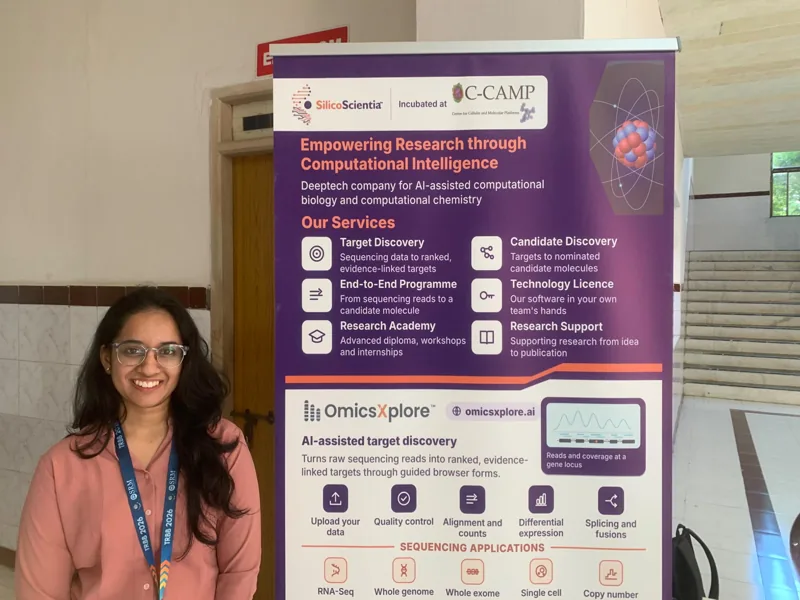
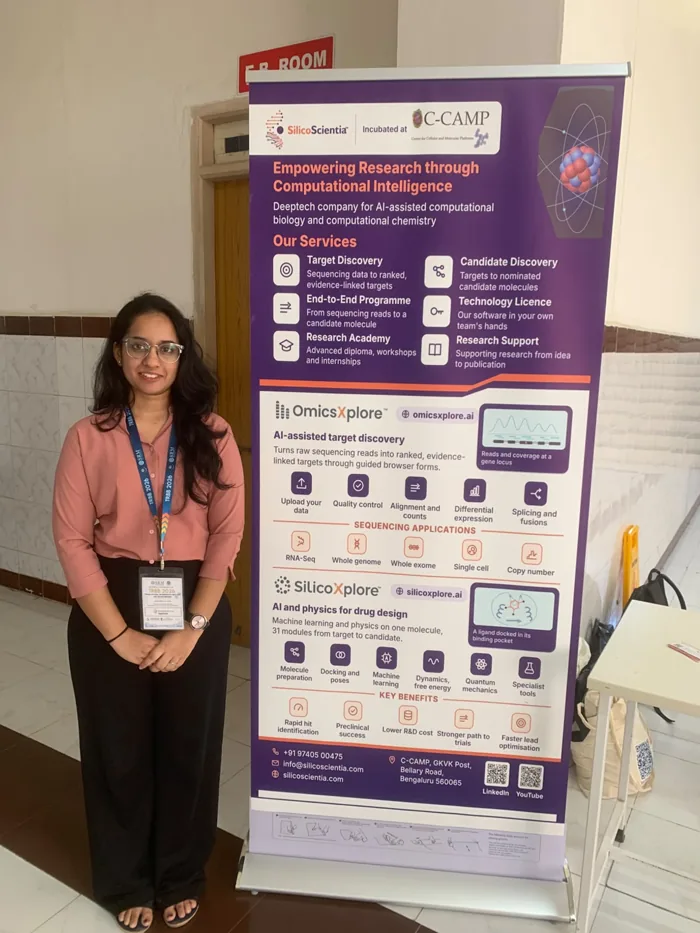
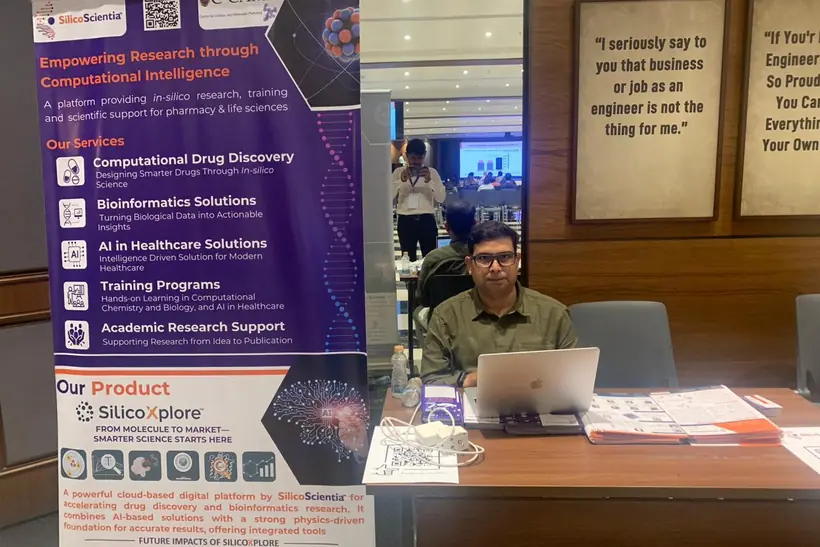
SilicoXplore and OmicsXplore stall at TRBB 2026
SRM Institute of Science and Technology, Chennai
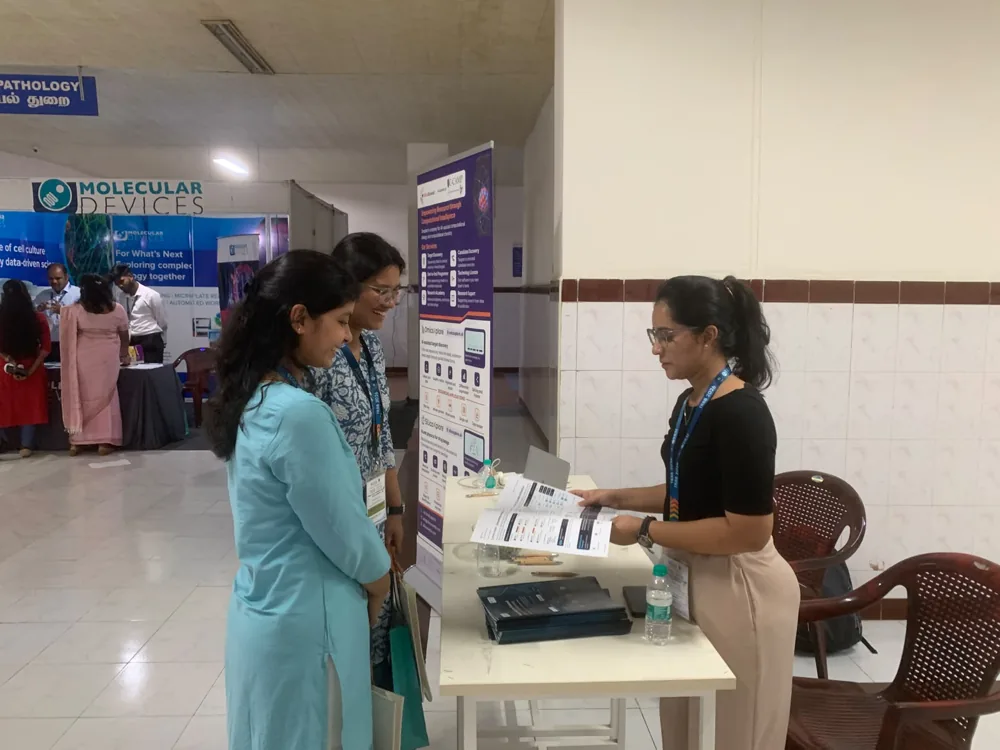
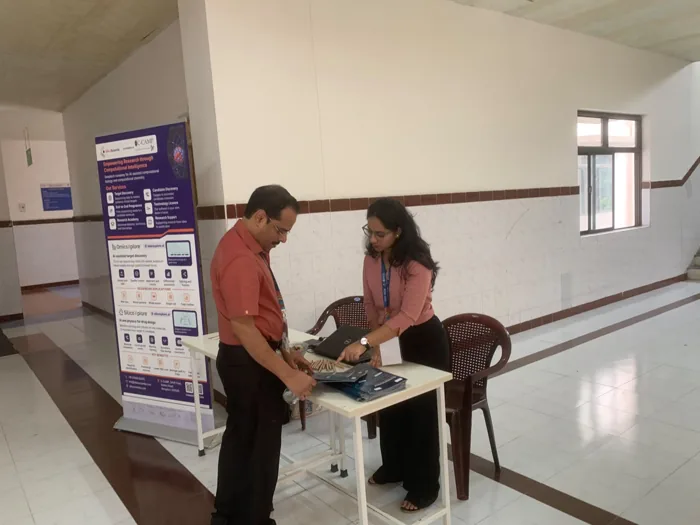
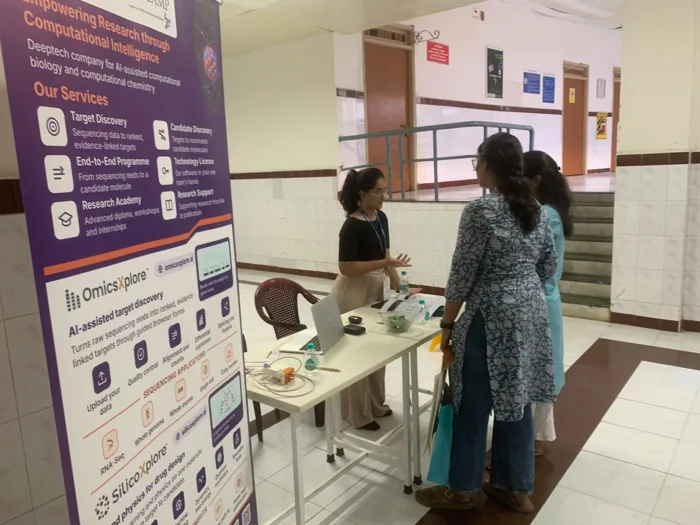
We took a stall at TRBB 2026, the National Conference on Translational Regenerative Biology and Bioengineering, and spent two days showing SilicoXplore and OmicsXplore to researchers, scientists and students, talking them through how the platforms work.
Seminar
4 and 5 November 2026
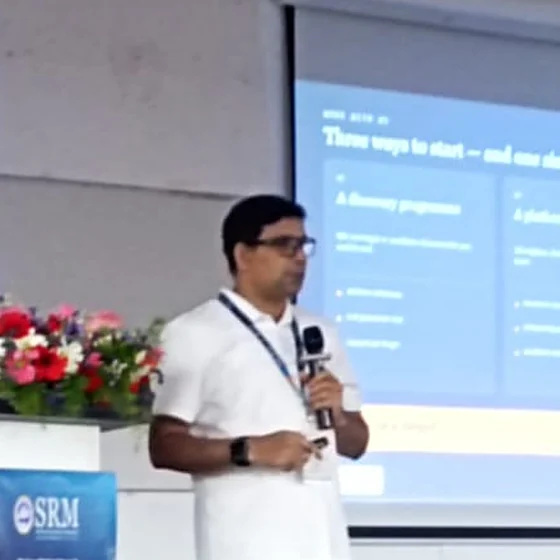
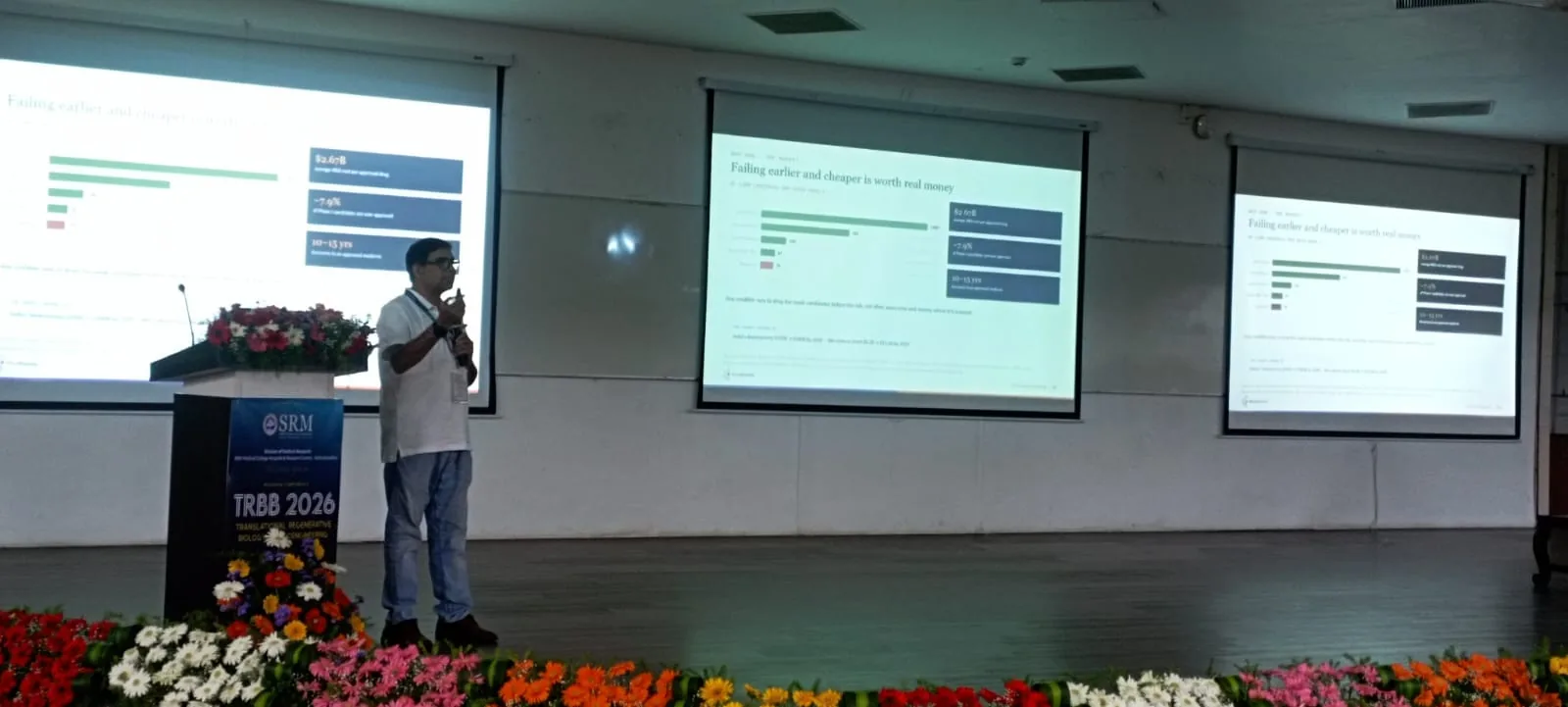
Lecture at TRBB 2026 on our technologies and research
SRM Institute of Science and Technology, Chennai
A lecture in the main programme of TRBB 2026, the National Conference on Translational Regenerative Biology and Bioengineering, explaining our technologies and research and the ways institutes and companies can work with us.
Conference
7 to 9 September 2026
IndiBioCom 2026
SRM Institute of Science and Technology, Chennai
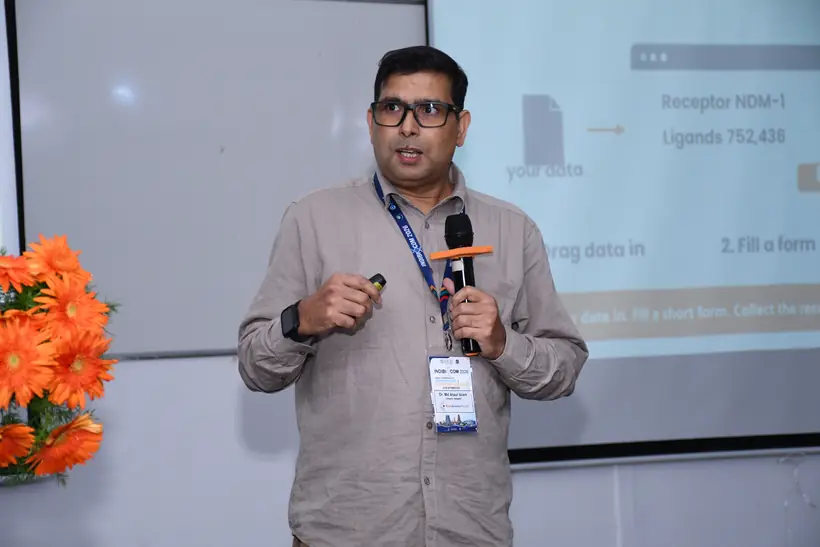
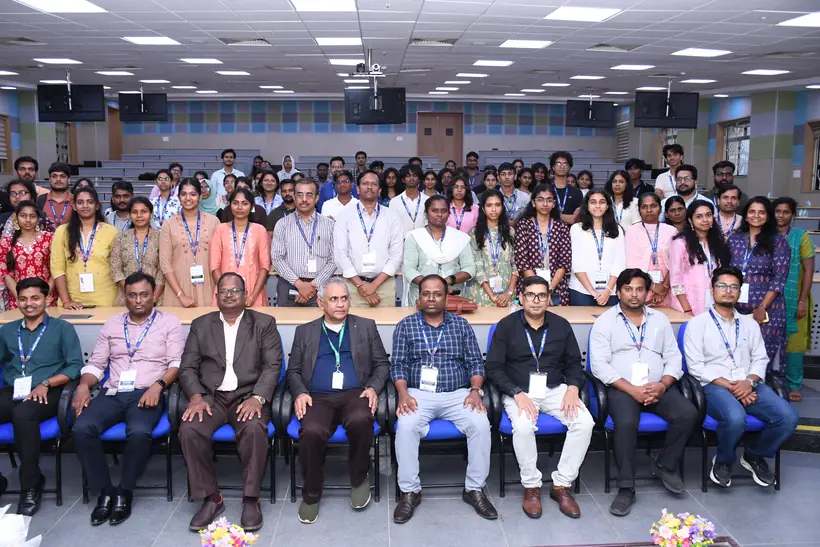
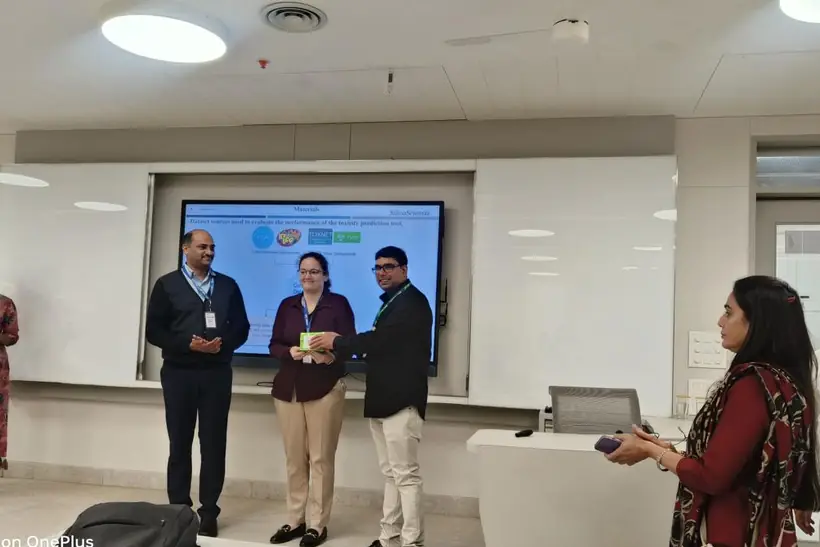
SilicoScientia presented at IndiBioCom 2026, covering AI-assisted target identification and the physics-based evaluation that follows it.
Workshop
6 September 2026
Hands-on workshop on SilicoXplore and OmicsXplore
SRM Institute of Science and Technology, Chennai
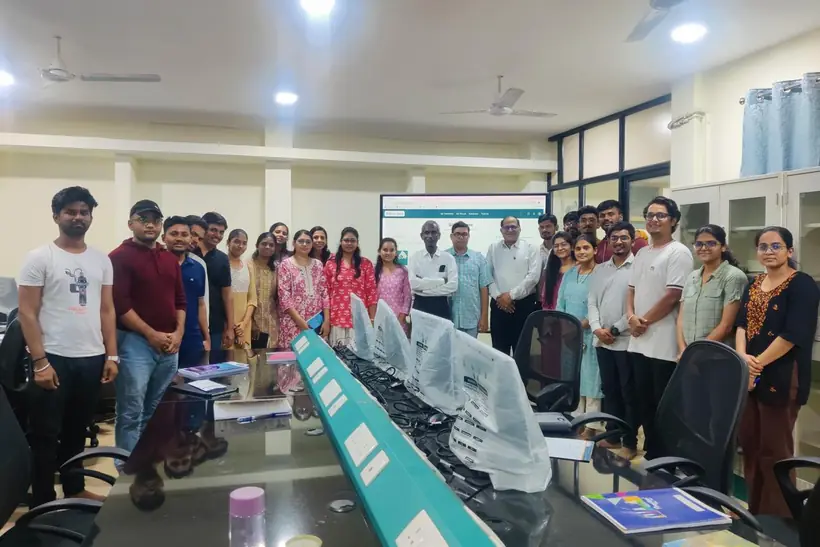
A full day of hands-on training in which participants ran both platforms themselves, from sequence analysis through to docking and pose evaluation.
Seminar
16 March 2026
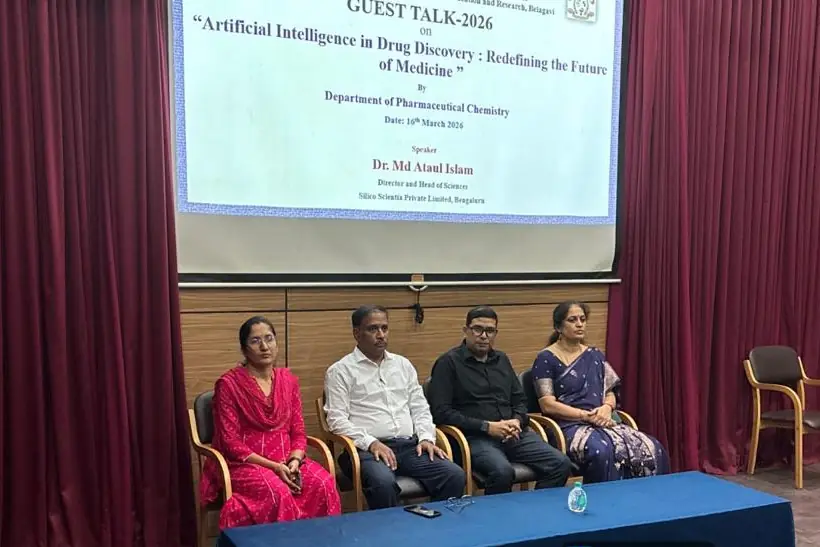
Guest Talk 2026 on Artificial Intelligence in Drug Discovery
KLE College of Pharmacy, Bengaluru
Dr. Md Ataul Islam spoke to the Department of Pharmaceutical Chemistry on how AI and physics-based methods are redefining the future of medicine.
Workshop
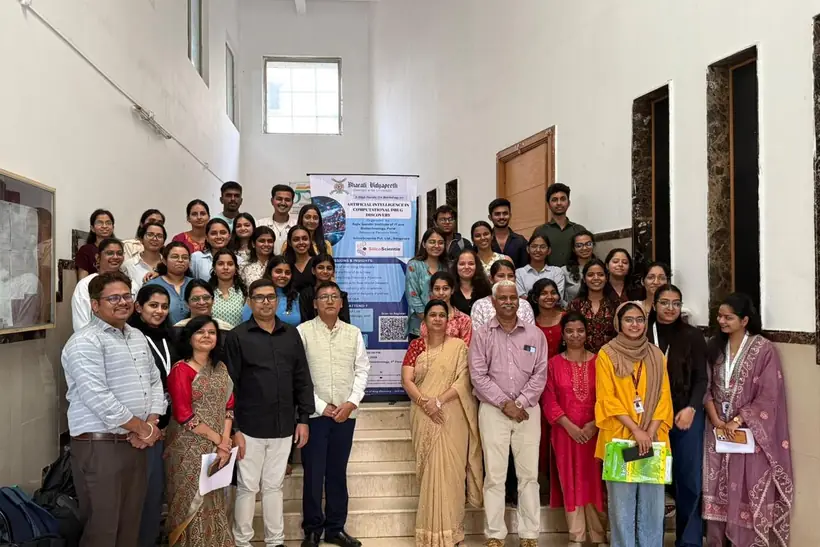
28 February 2026
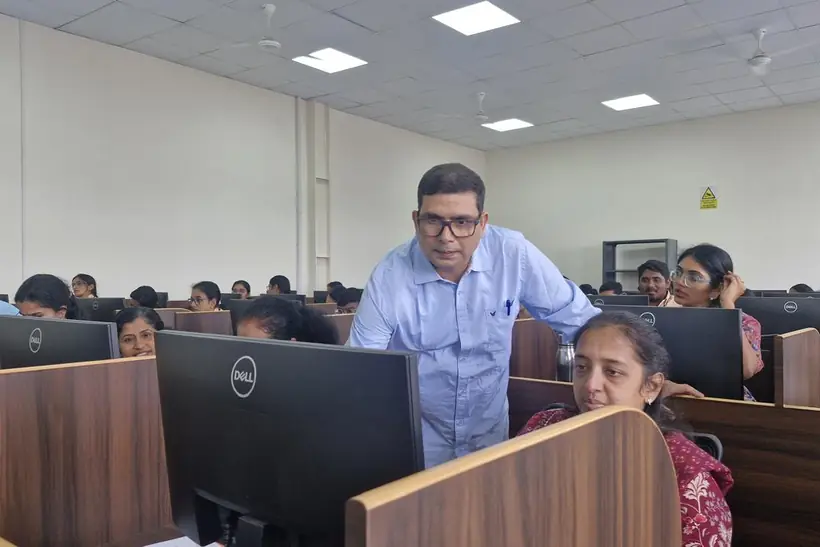
One-day hands-on workshop on AI-assisted drug discovery
RGITBT, Bharati Vidyapeeth, Pune
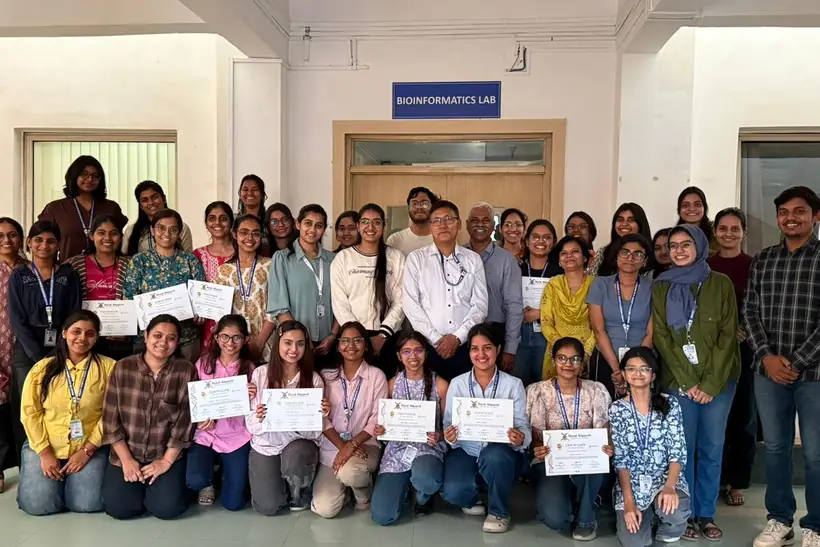
A condensed version of our three-day programme, run for a new cohort in the bioinformatics laboratory at Bharati Vidyapeeth.
Seminar
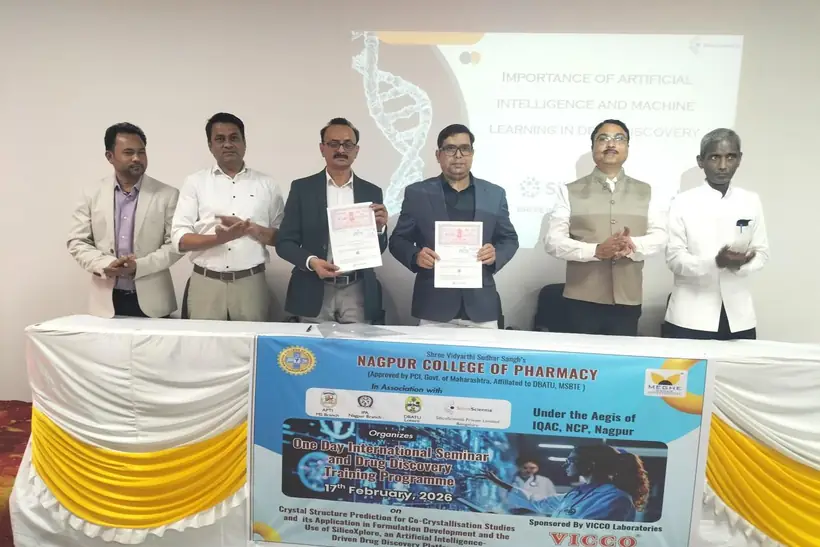
17 February 2026
International Seminar and Experimental Training Programme
Nagpur College of Pharmacy, Nagpur
An international seminar on the importance of artificial intelligence and machine learning in drug discovery, followed by an experimental training session.
Conference
6 and 7 February 2026
National Conference on Computational Biology and AI in Drug Discovery 2026
NMIMS, Mumbai
SilicoScientia exhibited and presented a case study on SilicoXplore applied to EGFR targeted glioblastoma treatment.
Workshop
6 and 7 August 2025
Two-day hands-on workshop on SilicoXplore
Ramaiah University, Bengaluru
Two days of supervised bench work in which participants took their own targets through the platform, with one-to-one support at every station.
Workshop
29 to 31 July 2025
Three-day hands-on workshop on AI-assisted drug discovery
RGITBT, Bharati Vidyapeeth, Pune
Our longest teaching programme to date, covering preparation, docking, machine-learning prediction and simulation across three full days.
Platform delivery to the Department of Pharmaceutical Sciences, with a live demonstration and training for the research group that would run it.
Seminar
5 February 2025
Seminar on computational drug discovery
University of Calcutta, Kolkata
A seminar for research scholars on how machine learning and physics-based methods combine across a single discovery workflow.
Seminar
10 December 2024
AI in Drug Discovery and Development: Opportunities and Challenges
Sir M. Visvesvaraya Institute of Technology, Bengaluru
An invited talk on where computational methods genuinely shorten a discovery programme, and where they do not.
Seminar
28 November 2024
Seminar and platform demonstration
Symbiosis International University, Pune
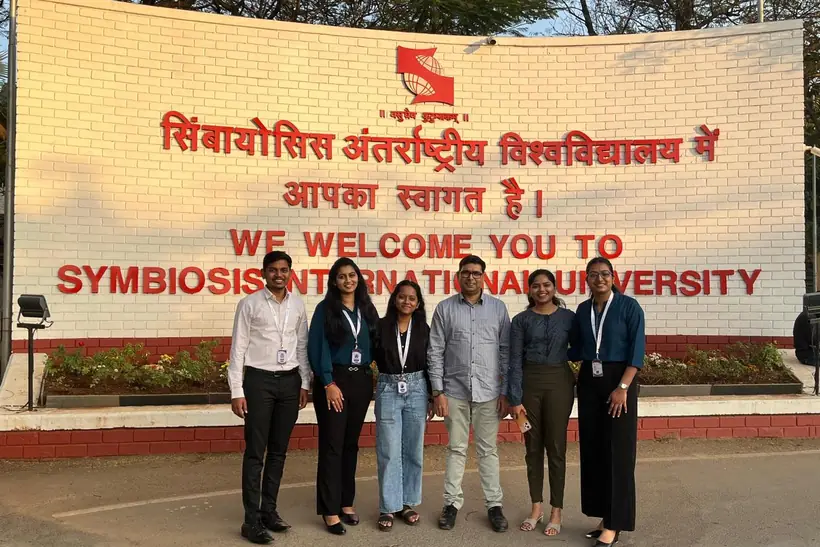
A seminar followed by a working demonstration of the platform for faculty and research students at the Symbiosis Institute of Technology.
Seminar
28 November 2024
Seminar and MoU signing
Dr. D. Y. Patil Institute of Pharmaceutical Sciences and Research, Pimpri, Pune
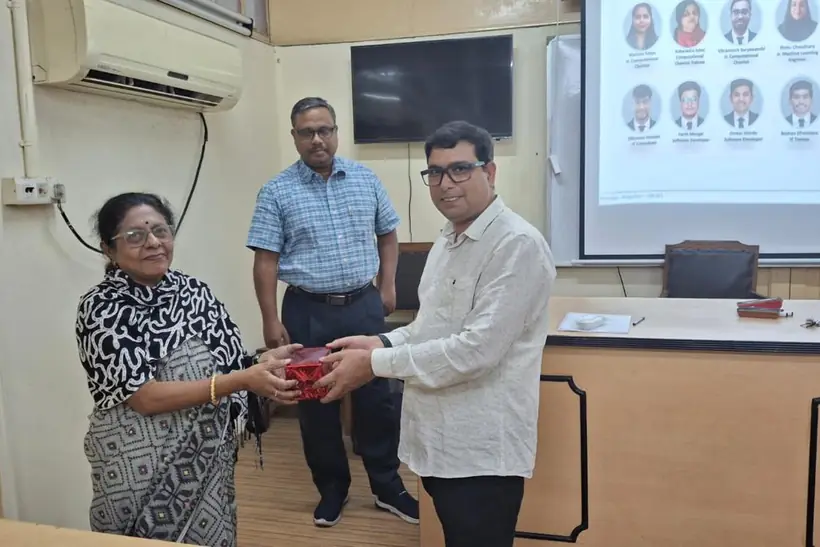
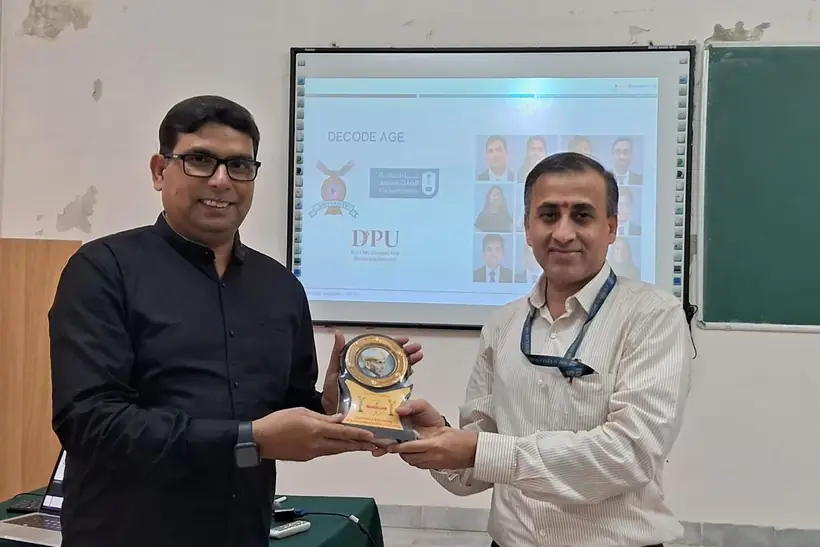
A seminar on AI-assisted drug discovery, concluded with the signing of a memorandum of understanding for joint research and training.
OutcomeThe institute, now the School of Pharmacy and Research at Dr. D. Y. Patil Dnyan Prasad University, is our partner for the Advanced Diploma, whose first batch has graduated.
Conference
26 and 27 November 2024
ICABB 2024, International Conference on Advances in Biotechnology and Bioinformatics
Dr. D. Y. Patil Biotechnology and Bioinformatics Institute, Pune
SilicoScientia presented the platform architecture behind SilicoXplore and OmicsXplore to an audience of biotechnology and bioinformatics researchers.
Company
6 June 2024
Company offsite
Lonavala, Maharashtra
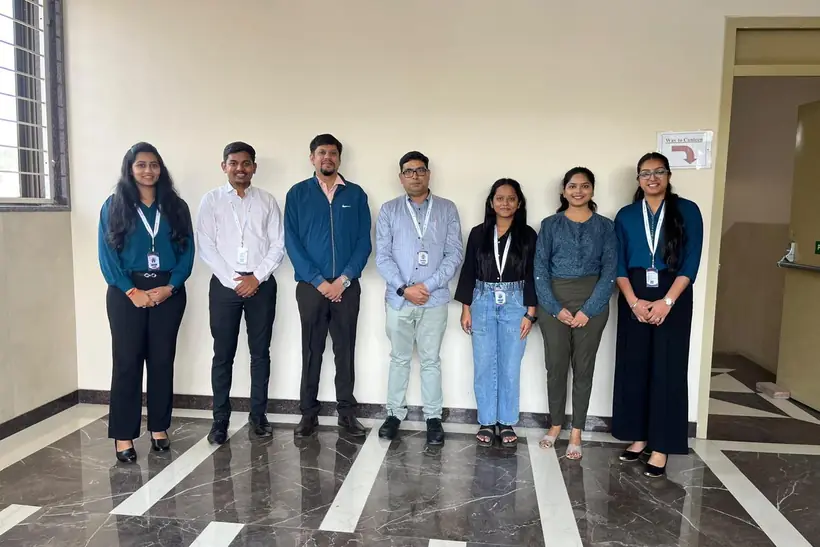
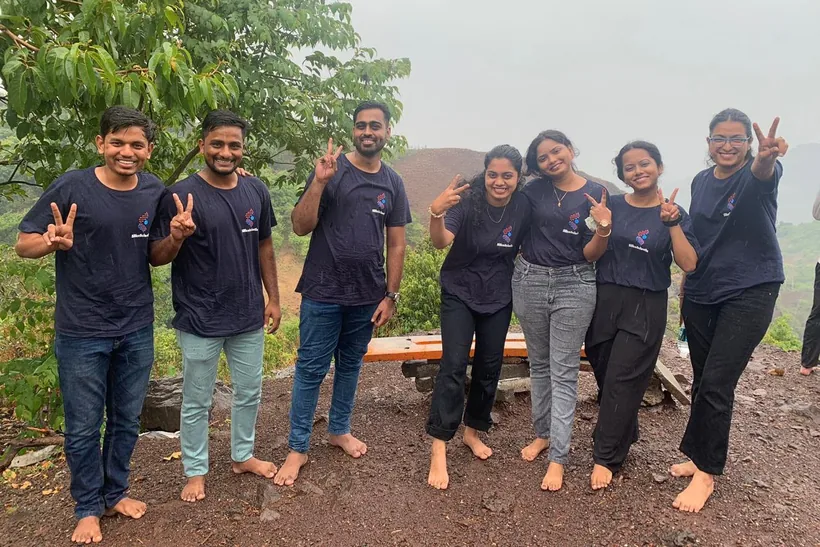
The whole team away from the screens for a day, which is how a small group that works this closely stays one.
No events in that category yet.
What we are reading
Outside science worth your time.
External commentary, not our news. These are articles by other people that bear on how we work, each with a line on why. It is a reading list and not a news feed, so it is chosen with care rather than updated daily. Every item opens the original source in a new tab.
The Nobel Prize award ceremony is held at the Stockholm Concert Hall on 10 December, the anniversary of Alfred Nobel's death. It is where the 2026 laureates, among them Henri Kagan and Kenso Soai in Chemistry and Karl Deisseroth, Peter Hegemann and Georg Nagel in Physiology or Medicine, receive their prizes. The Peace Prize is presented separately, in Oslo.
Google DeepMind describes a sequence model that, given a tissue, cell type or cell state, predicts how a DNA variant changes gene regulation in that one condition, including from a researcher's own single-cell data. On TenK10K, a map of 28 immune cell types, DeepMind reports that it identified causal variants at 30%, against 16% for the original model fine-tuned on single-cell data. These are the developer's own figures. It is open to non-commercial research through an API and, in DeepMind's words, is for research use only and not validated for clinical or diagnostic purposes.
Chai Discovery, which builds AI models for designing protein-based therapeutics, announces that Roche will use its models and platform in a number of drug discovery programmes. The release says Chai's latest model, Chai-3, achieves high target success rates and binding affinities, including on difficult targets. It is a company announcement: neither side has disclosed the targets, the terms or any results, so it shows where commercial interest is going rather than what the models have delivered.
Coverage of a Nature paper from Westlake University on Pinal, a model that turns a plain-language description of a protein's function into a designed sequence, trained on about 1.7 billion protein-text pairs. The gap between design and demonstration is the useful part: of 29 designed fluorescent-protein sequences that were tested, one fluoresced, and for a metabolic H-protein five of 20 worked, the best raising output of a carbon-capturing process to 1.7 times that of the natural E. coli protein. The authors say more work is needed before it is a routine lab tool.
Google DeepMind releases Cheminformatics Skills, which pair a language model with RDKit and the ChEMBL and PubChem databases. In its demo on the lung cancer kinase inhibitors crizotinib and lorlatinib, an agent builds potency models and proposes new macrocycles in about an hour. The authors say themselves that the designs are testable hypotheses, not finished drugs, and that every one still has to be made and measured.
Nature Communications reports that the quality-control tools used on metagenomes judge a viral genome complete by finding a circular contig, so they undercount complete linear DNA and RNA viruses. Using conserved genome ends instead, the authors recover 1,585 complete linear viral genomes, a 21-fold increase. It is a clear case of one default assumption in a pipeline quietly shaping the result.
A Nature Genetics technical report describes fastGxE, a method fast enough to scan whole genomes of biobank-sized cohorts for variants whose effect depends on environmental factors. Applied to UK Biobank physical traits and blood biomarkers, it finds context-dependent effects that earlier approaches, limited to candidate regions, could not reach.
A University of Exeter-led team in Genome Medicine describes what a typical genome looks like across UK Biobank and the All of Us programme. The average person differs from the reference at roughly 4.3 to 5.3 million sites, and people of African ancestry carry about a million more, partly because the reference was built mostly from people of European descent. It bears directly on how variants are called and interpreted in WGS and WES work.
Awarded for the discovery of non-linear effects and autocatalysis in asymmetric organic synthesis, work that explains how molecules with mirror image forms end up with one form dominating. Chirality decides whether a drug candidate works or harms, so this sits at the centre of medicinal chemistry.
Awarded for light-gated ion channels and optogenetics: Hegemann and Nagel identified channelrhodopsin in a single-celled alga, and Deisseroth turned it into a switch that turns defined nerve cells on and off in a living brain. It is a reminder that a target is only validated when someone can change it and watch what follows.
Drug Target Review's quarter in summary: what changed in target selection, modality choice and AI-assisted design, and which of it holds up against clinical evidence.
A review in Communications Biology covers protein binder design and conformational state prediction, the two problems that matter most once a static structure is no longer the bottleneck. Both feed directly into the preparation and docking stages of a discovery cascade.
The Human Pangenome Reference Consortium publishes its release schedule, with a third release of more than 350 assemblies planned for summer 2026. A pangenome reference changes variant calling for populations that the original reference represented poorly, which matters for every WGS and WES run.
OpenAI introduces a model built for biology, drug discovery and translational research, released as a research preview to qualified users. Worth reading alongside the caveat that applies to every such system: a prediction is a hypothesis until an experiment or a physics-based calculation says otherwise.
Google DeepMind marks five years since AlphaFold 2, with its free structure database now used by millions of researchers. Predicted structures are the starting point for much of the pocket detection and docking work we run.
The MIT and Boltz preprint behind BoltzGen, an open-source model that designs proteins and peptides to bind a wide range of targets and reports experimental campaigns across 26 targets. It is one of the Boltz packages available inside SilicoXplore through our collaboration, and it is a preprint that has not yet been peer reviewed.
Nature Medicine reports the first randomised trial of a drug whose target and molecule were both found with generative AI, in the same disease as our OmicsXplore case study. It is a small, 12 week phase 2a study, so read it as encouragement and not as proof.
A study of five nf-core/rnaseq configurations found that differential gene calls agreed about 85% of the time, with most disagreements in lowly expressed genes. It is the clearest argument for recording every parameter and engine version, which is what every OmicsXplore job does.
We run hands-on workshops, seminars and training programmes at universities and research institutes across India. Participants work on live platforms and their own targets, not on slides.