
 RDKit
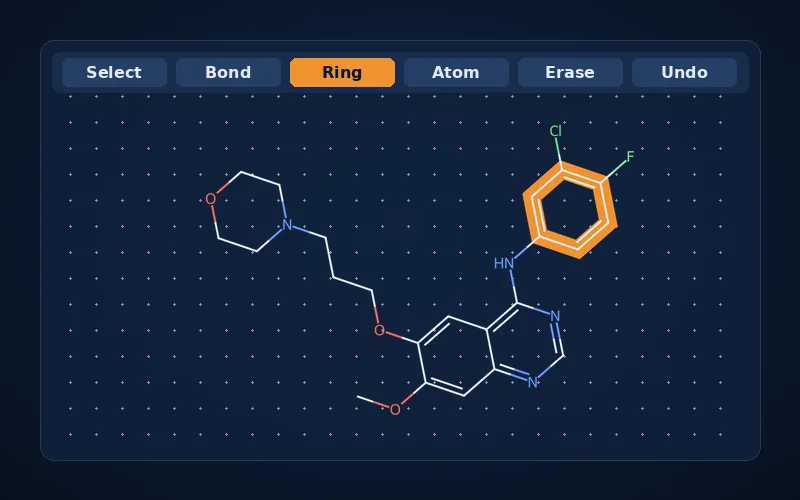
RDKitSketcher
Draw and edit structures in the browser, then export to any common chemical format.
KetcherSilicoScreen · SilicoSAR
SilicoDock · DiffuseBind
SilicoPeptify · Mutation Inducer
DeNovo-Generator · PharmK-AI
SilicoMD
SilicoGBSA
SilicoFEP
DFT
The remaining 12 modules are the preparation, visualisation and analysis steps that both sides share, from structure standardisation and pocket detection through to interaction profiling.
SilicoScreen passes each molecule through stacked graph isomorphism layers and a multi head graph attention layer, giving the expressivity to separate close analogues while triaging millions of compounds. SilicoSAR adds potency regression with nine feature selection routes and an applicability domain score on every prediction.
SilicoDock is our own SE(3) equivariant diffusion engine. Ligand poses are reverse diffused from Gaussian noise anchored at binding site grid points, with rigid body steric guidance and fragment aware torsion updates at each step, then ranked by a surface based mixture density scoring function. DiffuseBind brings the same class of method through DiffDock.
A protein language model predicts the stability change on point mutation through contextual sequence embeddings. SilicoPeptify embeds each residue from a 1875 dimensional descriptor vector and generates sequences under property, motif or complementarity constraints. Receptor specific transformer ensembles rescore poses for both protein and nucleic acid complexes.
All atom molecular dynamics with particle mesh Ewald electrostatics, end point MM-GBSA and MM-PBSA binding free energy, alchemical free energy perturbation across lambda windows, and Kohn Sham density functional theory for frontier orbitals and reactivity descriptors. Each is set up from a single form with defaults drawn from accepted practice.
A modern discovery programme passes through generative design, activity classification, pharmacokinetic filtering, several docking protocols, replicate molecular dynamics, free energy estimation and quantum chemical work. Each stage is well served by mature software. Chaining them is where the time goes.
All thirty one modules share the same internal data model. Nothing is exported, reformatted or prepared again at a stage boundary.
Grid boxes come from a co crystal centroid or a detected pocket. Preparation happens inside the module rather than before it.
Each job stores its full parameter set, engine versions and logs beside its results, so any run can be inspected, repeated or shared.
All 31 modules on one screen, grouped by functional area and ordered the way a campaign runs. Hover over a tile for a one-line description.
Number module, by area
Symbol short name used in workflows
Name
Bottom line engine it runs, or developed in-house
AImachine-learning modelPhysicsphysics-based method
Everything a structure needs before the science starts, from drawing and standardisation through to pockets and homology models.
RDKitDraw and edit structures in the browser, then export to any common chemical format.
Ketcher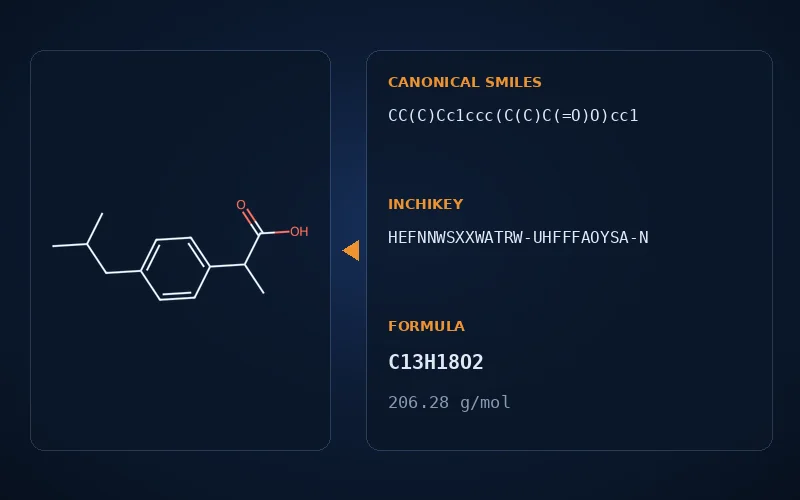 RDKit
RDKitStandardise every structure to canonical SMILES and InChI so one molecule stays one record.
RDKit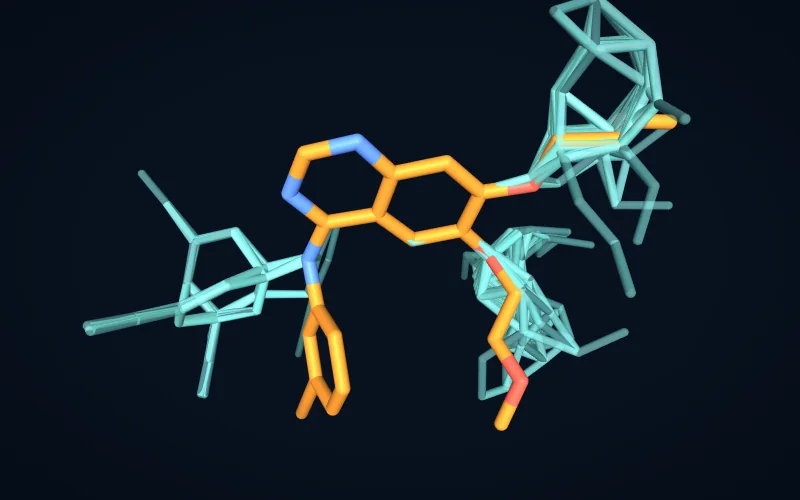 RDKit · ETKDG
Generate and rank 3D conformers from torsional knowledge, ready for docking and shape comparison.
ETKDG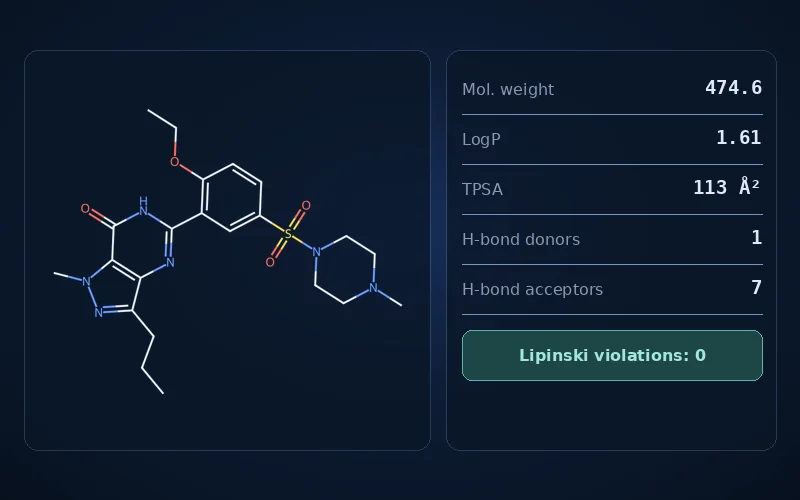 RDKit
RDKitReturn molecular weight, LogP, TPSA and drug likeness descriptors straight from the input structure.
In house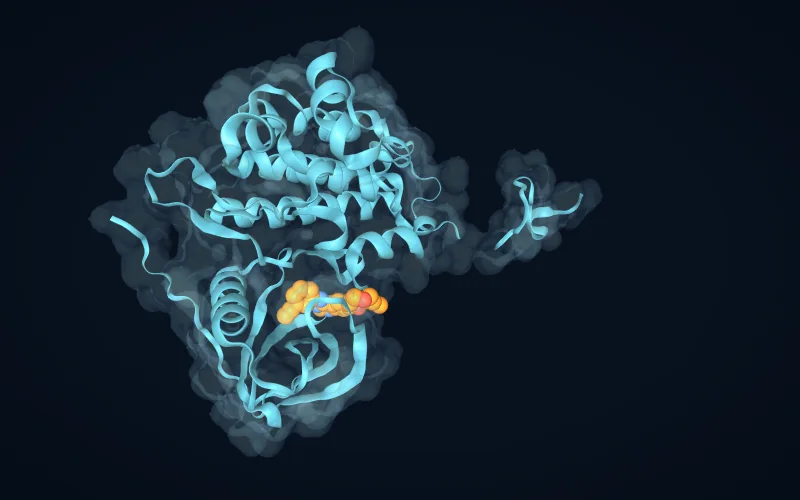 PDB 1M17
Inspect proteins and complexes in the browser with GPU accelerated cartoon, surface and stick views.
NGL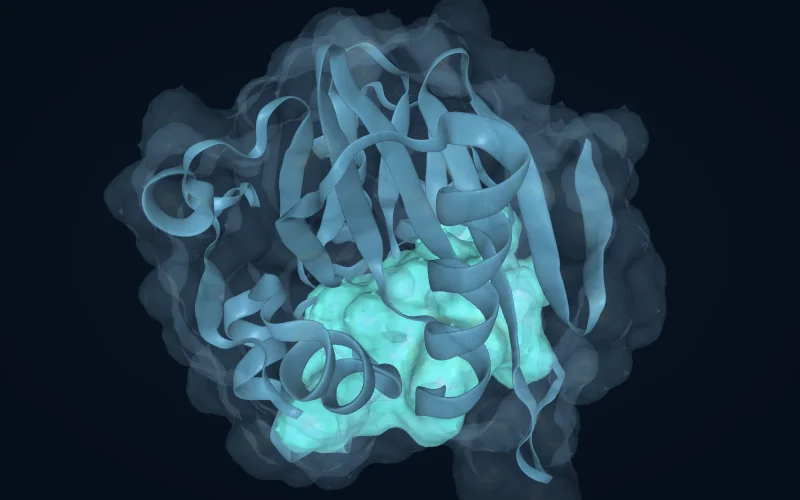 PDB 4EYL
Detect and rank binding cavities by volume, depth and druggability before you commit to a site.
fpocket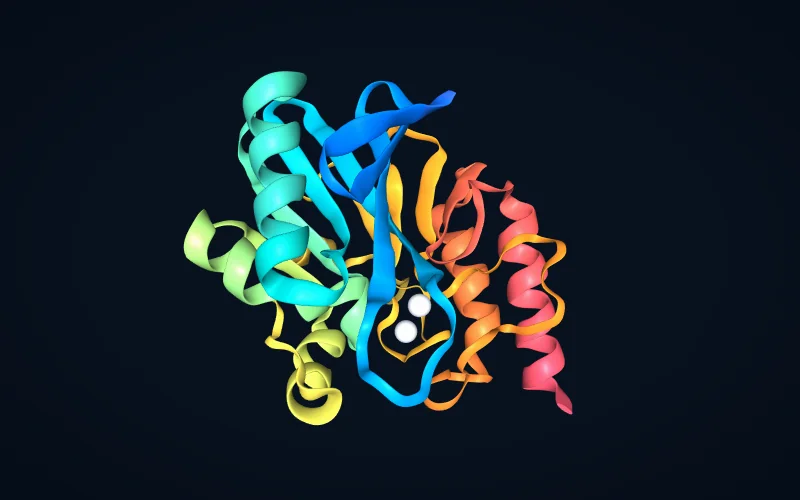 PDB 4EYL
Build a three dimensional model from sequence and template, scored for quality before you use it.
MODELLER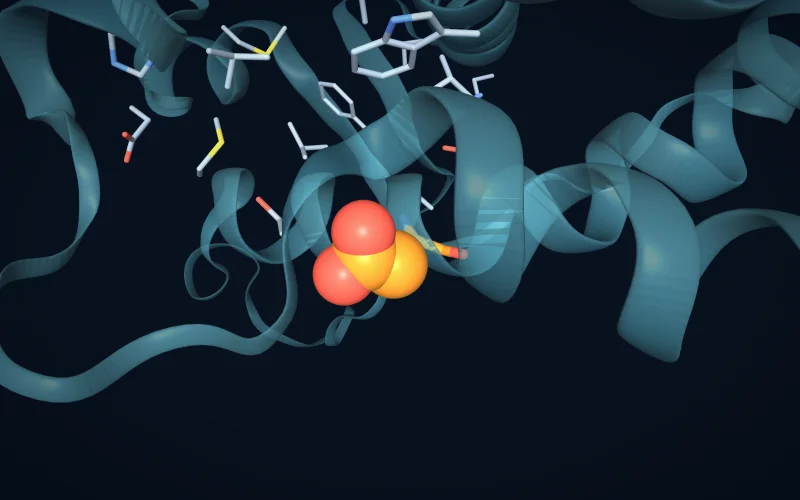 PDB 3ERT
Predict the stability change on point mutation and see which substitutions a protein will tolerate.
THPLMFive docking engines under one interface, with protocol validation, rescoring and interaction analysis built around them.
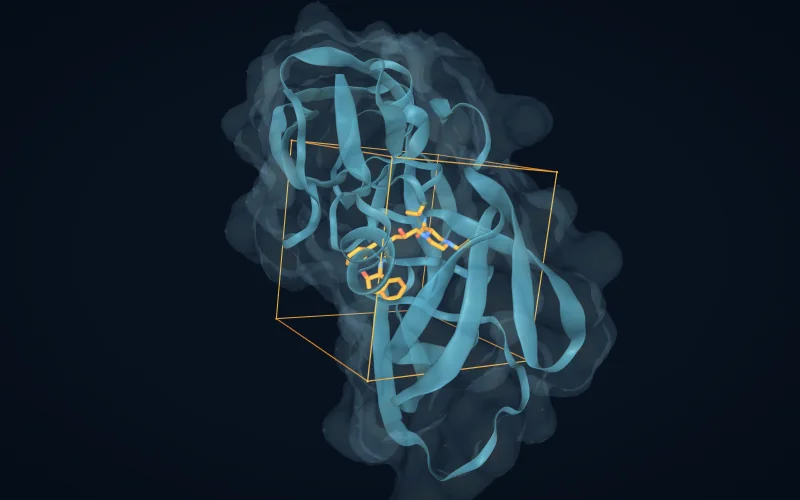 PDB 1HSG
Screen libraries of any size with Monte Carlo search and empirical scoring, from a grid box built for you.
AutoDock Vina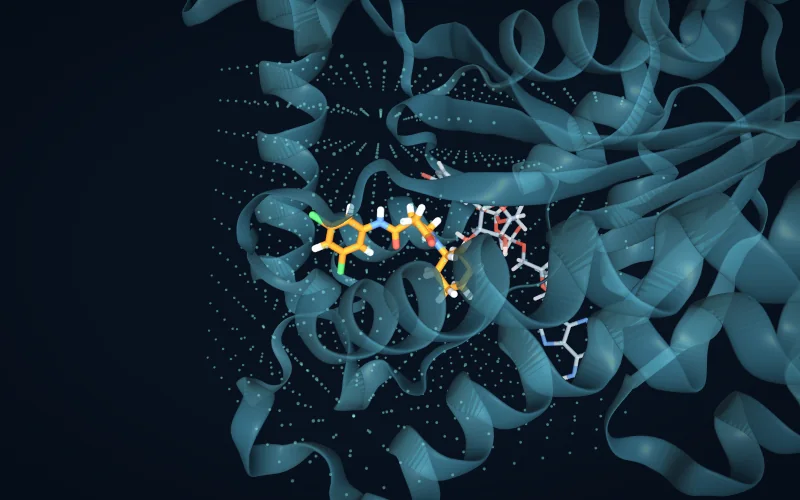 PDB 4TZK
Pair empirical scoring with a convolutional network so pose selection reads the shape of the pocket.
GNINA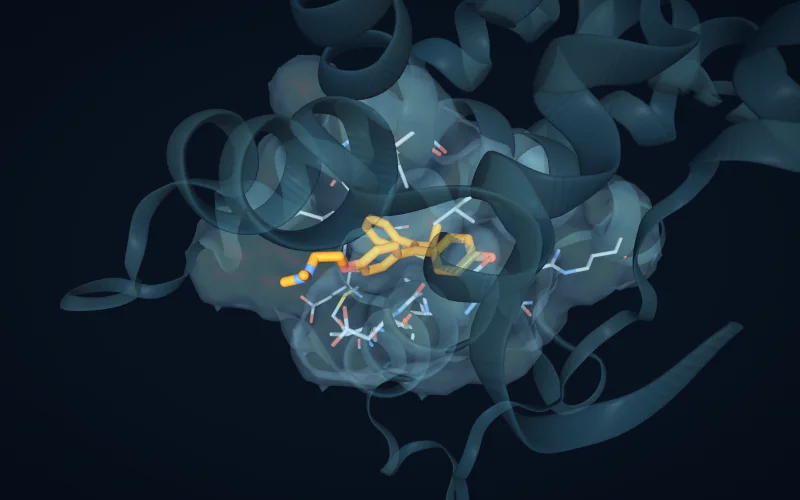 PDB 3ERT
Sample position, orientation and torsion angles together, scoring every pose as it is generated.
PLANTS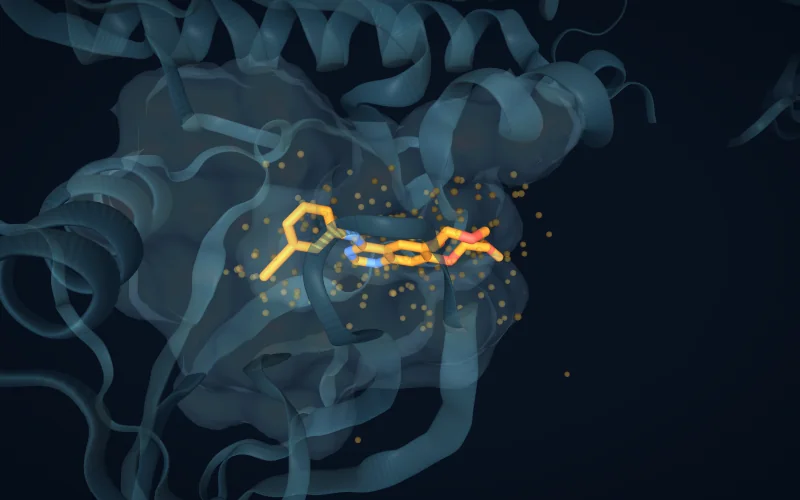 PDB 1M17
Generate poses by reverse diffusion and rank them with a confidence model rather than a score function.
DiffDock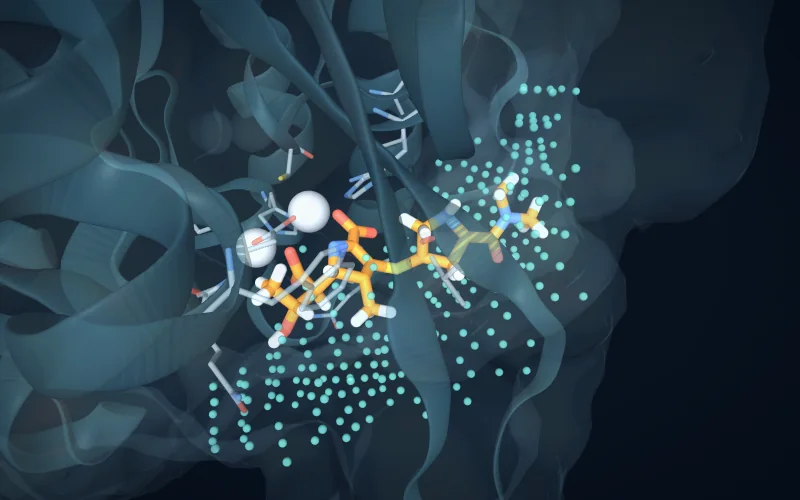 PDB 4EYL
Our own diffusion engine anchors sampling at pocket grid points and ranks poses by surface contact density.
In house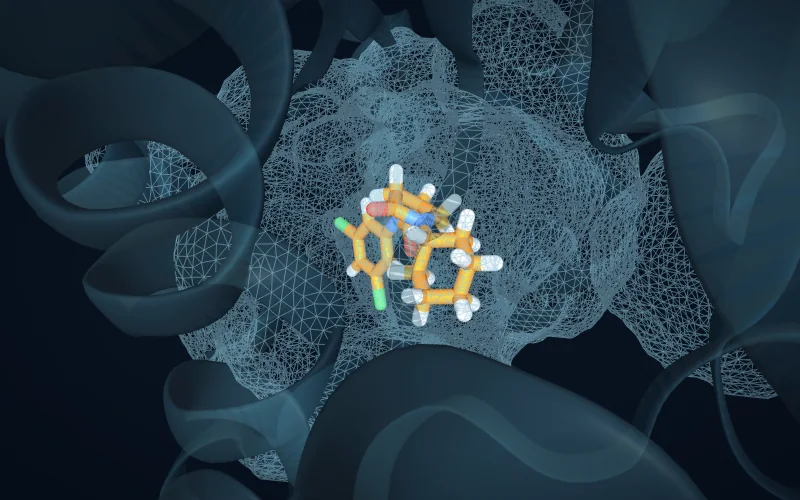 PDB 4TZK
Validate a protocol before you trust it by redocking the crystallographic ligand and reporting RMSD.
In house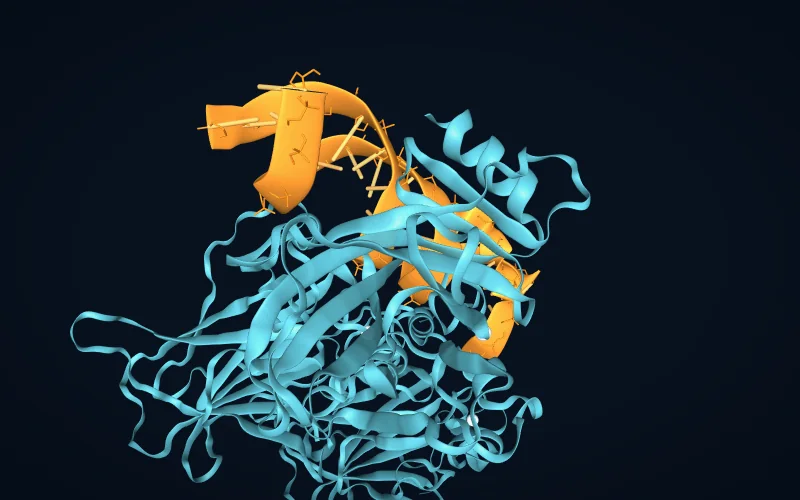 PDB 1TUP
Rescore docked poses for protein and nucleic acid complexes using receptor specific transformer models.
In house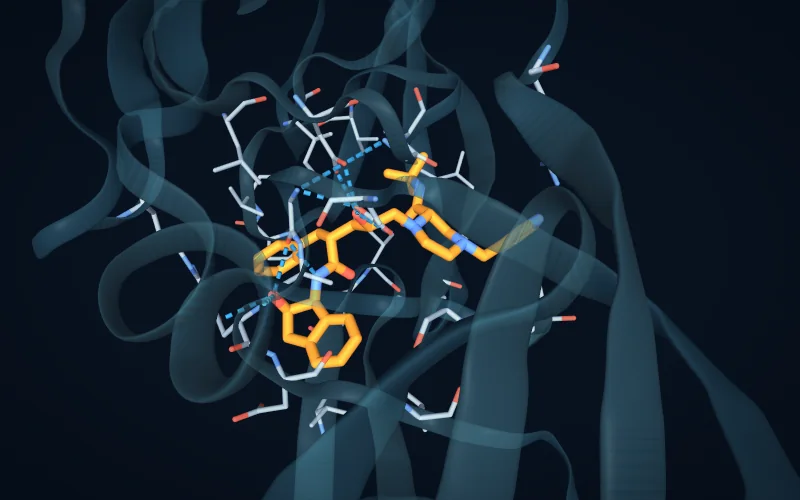 PDB 1HSG
Rank poses by binding energy and carry the most favourable one forward automatically.
In house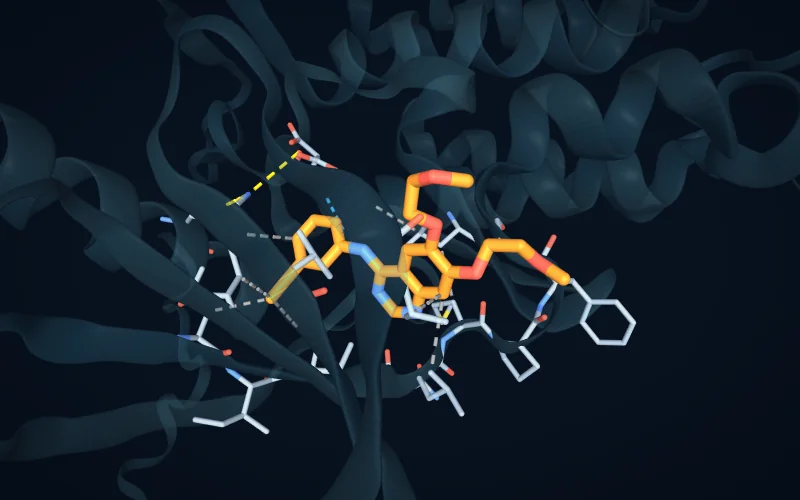 PDB 1M17
Identify every hydrogen bond, hydrophobic contact, salt bridge and metal coordination in the complex.
PLIPSimilarity, pharmacophores, potency, toxicity, ADMET and generative design, each served by its own trained model.
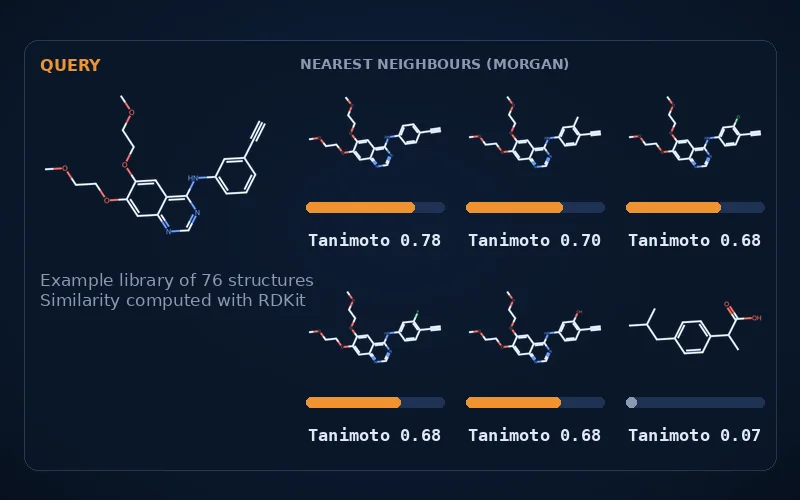 RDKit
RDKitSearch any library by fingerprint similarity, or invert it to find novelty and balanced subsets.
In house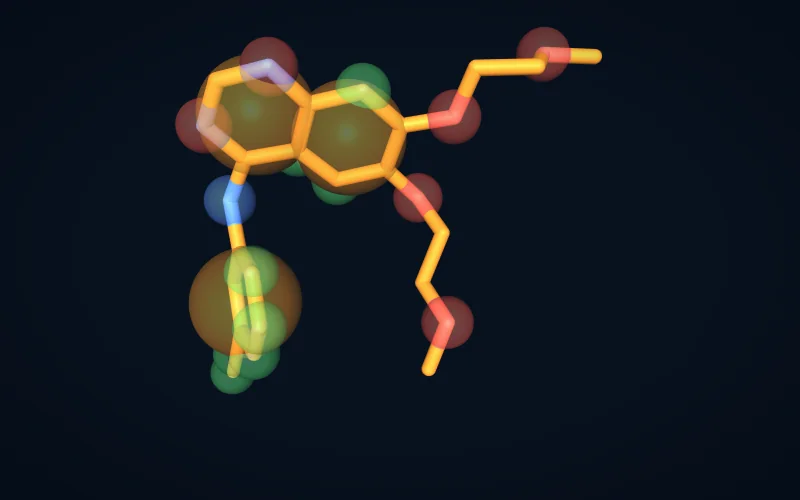 RDKit
RDKitCompare pharmacophoric features against a reference so candidates keep the pattern that matters.
In house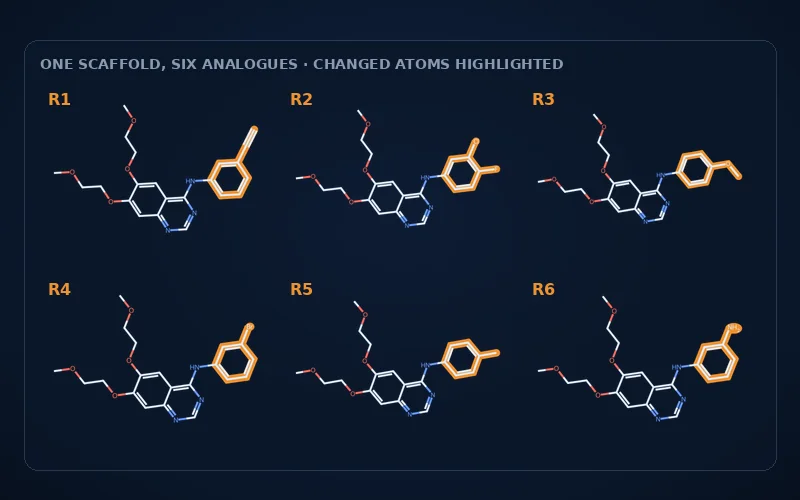 RDKit
RDKitPredict potency from structure with nine feature selection routes and an applicability domain on every value.
XGBoost, LightGBM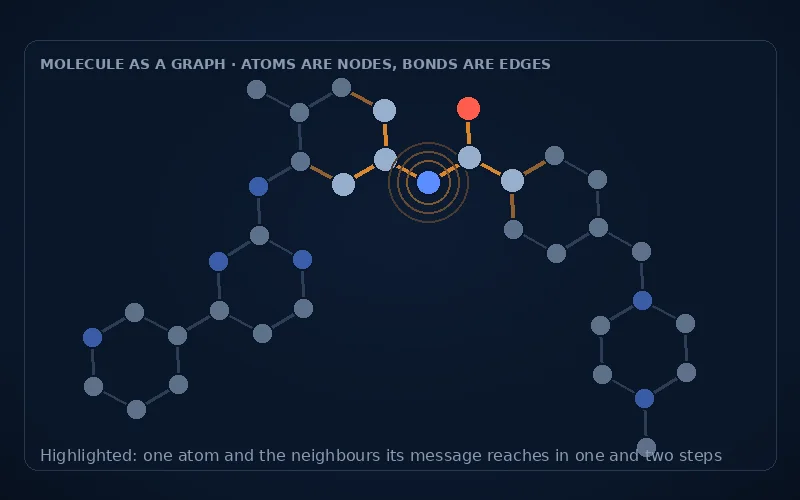 RDKit
RDKitTriage millions of molecules with a graph network that reads structure directly, with no descriptors required.
In house GNN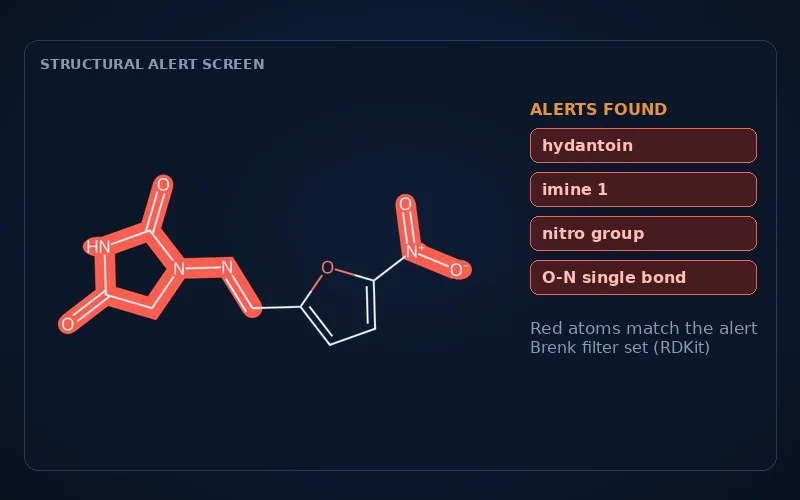 RDKit
RDKitFlag likely toxicity early with a deep network trained on molecular property data.
In house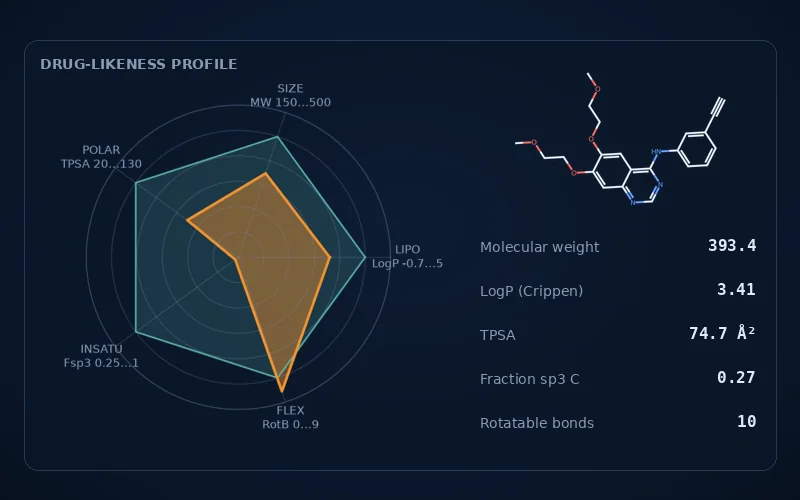 RDKit
RDKitRun a full ADMET panel across absorption, distribution, metabolism, excretion and toxicity for large sets.
ADMET-AI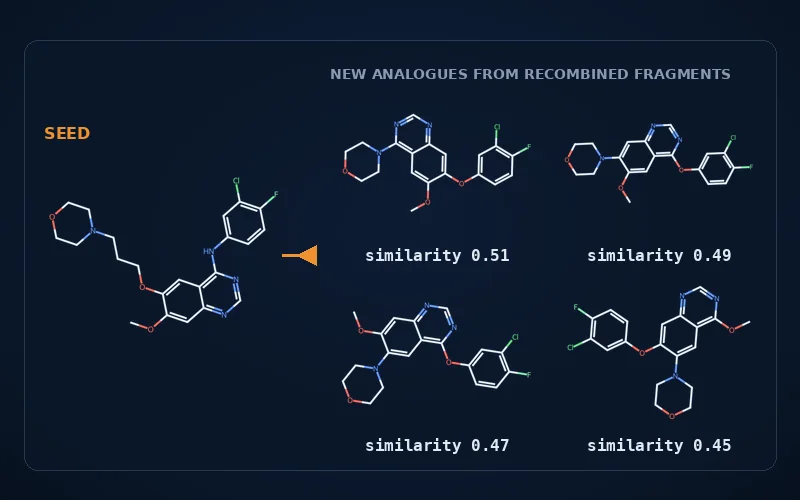 RDKit · BRICS
Generate novel analogues from a single seed using a network trained on a million ChEMBL structures.
DeLA-DrugDynamics, end point and alchemical free energy and density functional theory, all set up from a single form.
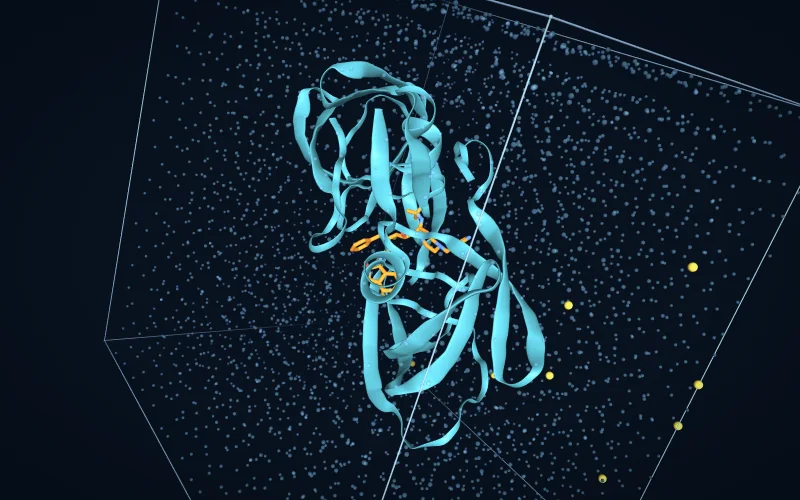 PDB 1HSG
Run all atom dynamics without Linux and get RMSD, RMSF, radius of gyration, SASA and PCA back as finished plots.
GROMACS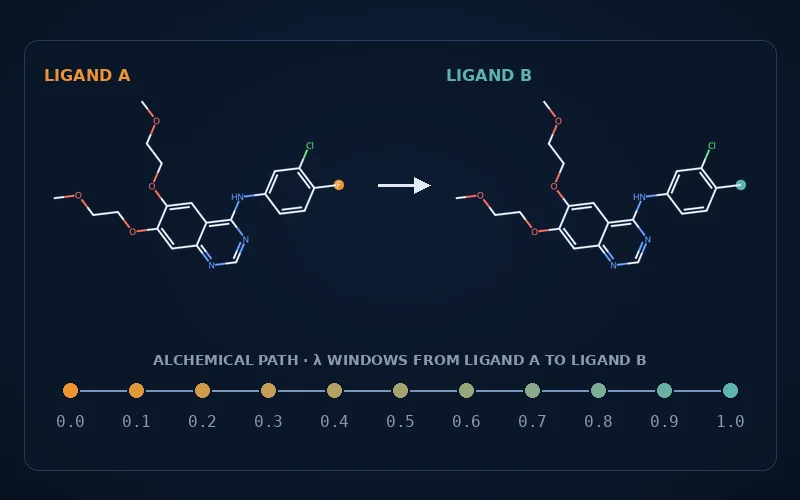 RDKit
RDKitEstimate relative binding free energy across lambda windows, with per window and cumulative profiles.
GROMACS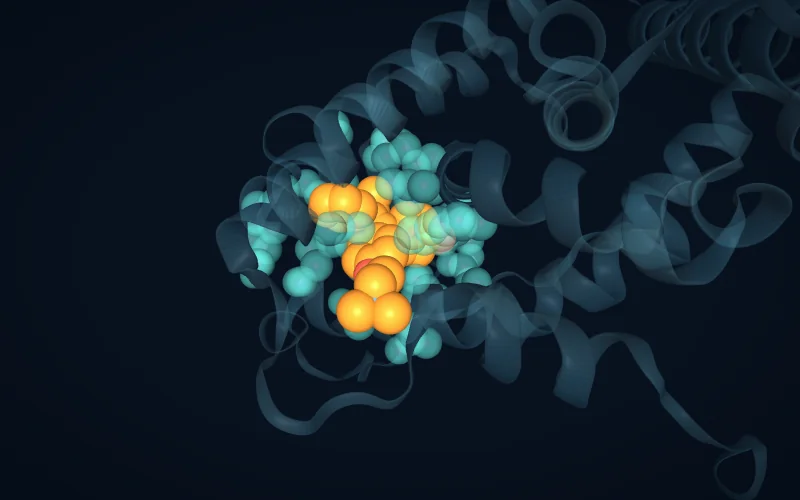 PDB 3ERT
Decompose binding free energy from your trajectory by MM-GBSA and MM-PBSA in a single pass.
gmx_MMPBSA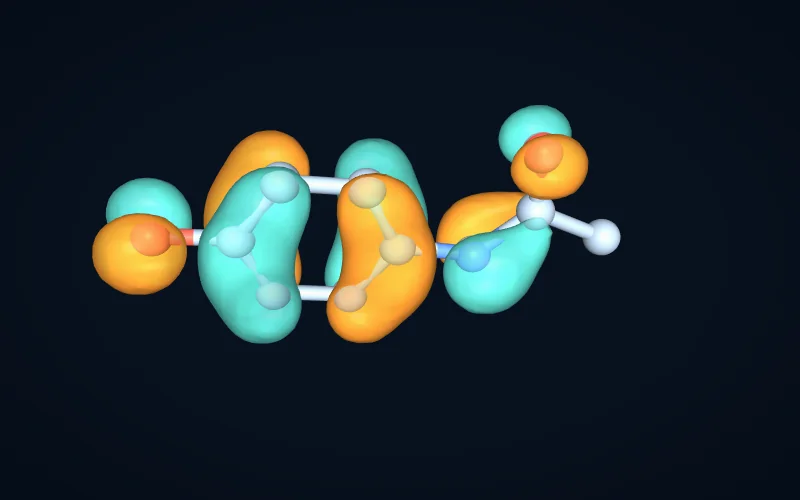 PySCF · B3LYP/6-31G*
Compute frontier orbitals, electrostatic potential maps and reactivity descriptors from first principles.
Psi4, LibXCSingle module areas that reach beyond the small molecule space, from sequence quality control at the front of a campaign to peptide design and solid form prediction.
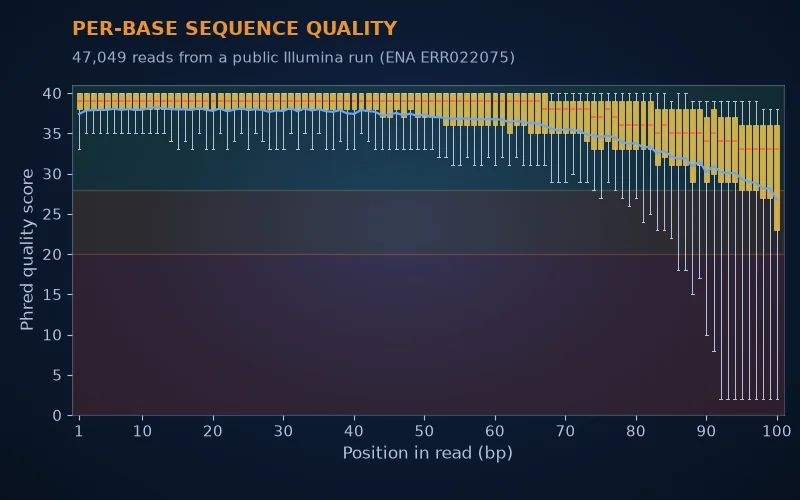 ENA ERR022075
Assess raw sequencing quality by Phred score, k-mer frequency, GC content and duplication.
FastQC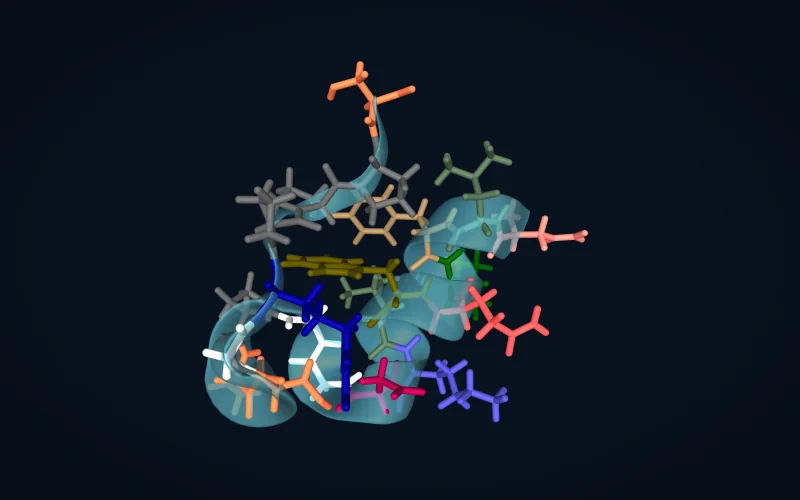 PDB 1L2Y
Design peptides residue by residue against target properties, motifs or complementarity to a surface.
In house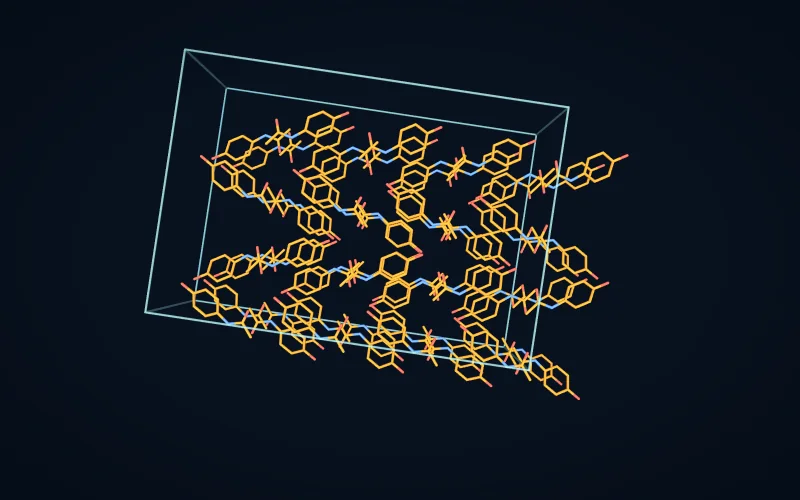 COD 1548348
Predict crystal packing with symmetry constrained generation scored by a materials graph network.
PyXtal, M3GNet
Where a well validated implementation was available we integrated it. Where none was, we built our own and published the method.
An SE(3) equivariant diffusion sampler that generates poses by reverse diffusion from noise anchored at binding site grid points, ranked by a surface based mixture density scoring function.
A hybrid graph isomorphism and graph attention network that reads molecular structure directly, giving large scale triage without descriptor engineering.
Bioactivity prediction with nine feature selection methods, five model families and an applicability domain score that flags predictions made outside the training space.
A four layer transformer encoder over physicochemical embeddings that generates sequences residue by residue under property, motif or complementarity constraints.
Two things decide whether a technology of this kind is worth using: whether its models hold up on compounds they were never trained on, and whether its docking reproduces a structure that is already known. Both are published.
Potency regression on pIC50. The external set was held out entirely, and performance tracks the internal test set.
n = 5,318
RMSE 0.28 log units
n = 1,400
RMSE 0.66 log units
n = 759
RMSE 0.65 log units
Bars show R² and Pearson r, where higher is better. RMSE is in log units, where lower is better. Islam, Bhowmick & Chikhale, Comput Biol Chem 126, 109467.
| Data split | Compounds | R² | RMSE | Pearson r |
|---|---|---|---|---|
| Training | 5,318 | 0.92 | 0.28 | 0.96 |
| Internal test | 1,400 | 0.58 | 0.66 | 0.77 |
| External validation | 759 | 0.61 | 0.65 | 0.78 |
Before a protocol is trusted, SelfDocking redocks the crystallographic ligand into its own structure and reports the deviation from the experimental pose. A deviation of 2.0 Å or less is conventionally taken as a reproduced pose.
EGFR: 36,000 natural products reduced to 8 candidates stable over 200 ns. NDM-1, a resistance enzyme with no clinical inhibitor: 752,436 generated structures reduced to 4. Each ran end to end inside one session.
EGFR case study. Each stage ran in a named module, and no file was exported between them.
Bar lengths on a log scale. Islam, Bhowmick & Chikhale, Comput Biol Chem 126, 109467.
The technology and its machine-learning core have each been through peer review, with the data and protocols available for inspection.
Journal of Molecular Graphics and Modelling
The technology itself, the shared chemical representation across its modules, and the NDM-1 case study that narrowed 752,436 generated structures to four candidates carried to free energy.
Volume 149 (2026), article 109566 · Mangal, Shinde, Chikhale, Bhowmick & Islam
Computational Biology and Chemistry
Potency prediction from structure, benchmarked on training, test and external sets, and applied to a screen of 36,000 natural products.
Volume 126, article 109467 · Islam, Bhowmick & Chikhale
A PDB entry, a sequence, a SMILES file or a library. Preparation is part of the task rather than a prerequisite for it.
Hosted by us, deployed in your own cloud, or installed on your own servers for work that cannot leave the building.